Compare learning activities · A guide for adults
When Japanese sounds and spelling differ
Compare the particles は・を・へ and long-vowel spellings: two challenges that arise after children begin to read hiragana.
See levels, routes and learning goals
Choose by the skill being explored. HOP, STEP and JUMP describe Chicodori content levels, not overseas school grades. The branch descriptions explain what to look for in each activity.
HOP · JapaneseCharacters & spelling
HOP · JapaneseSentence structure
Choose a branch to open the activities and teaching notes.
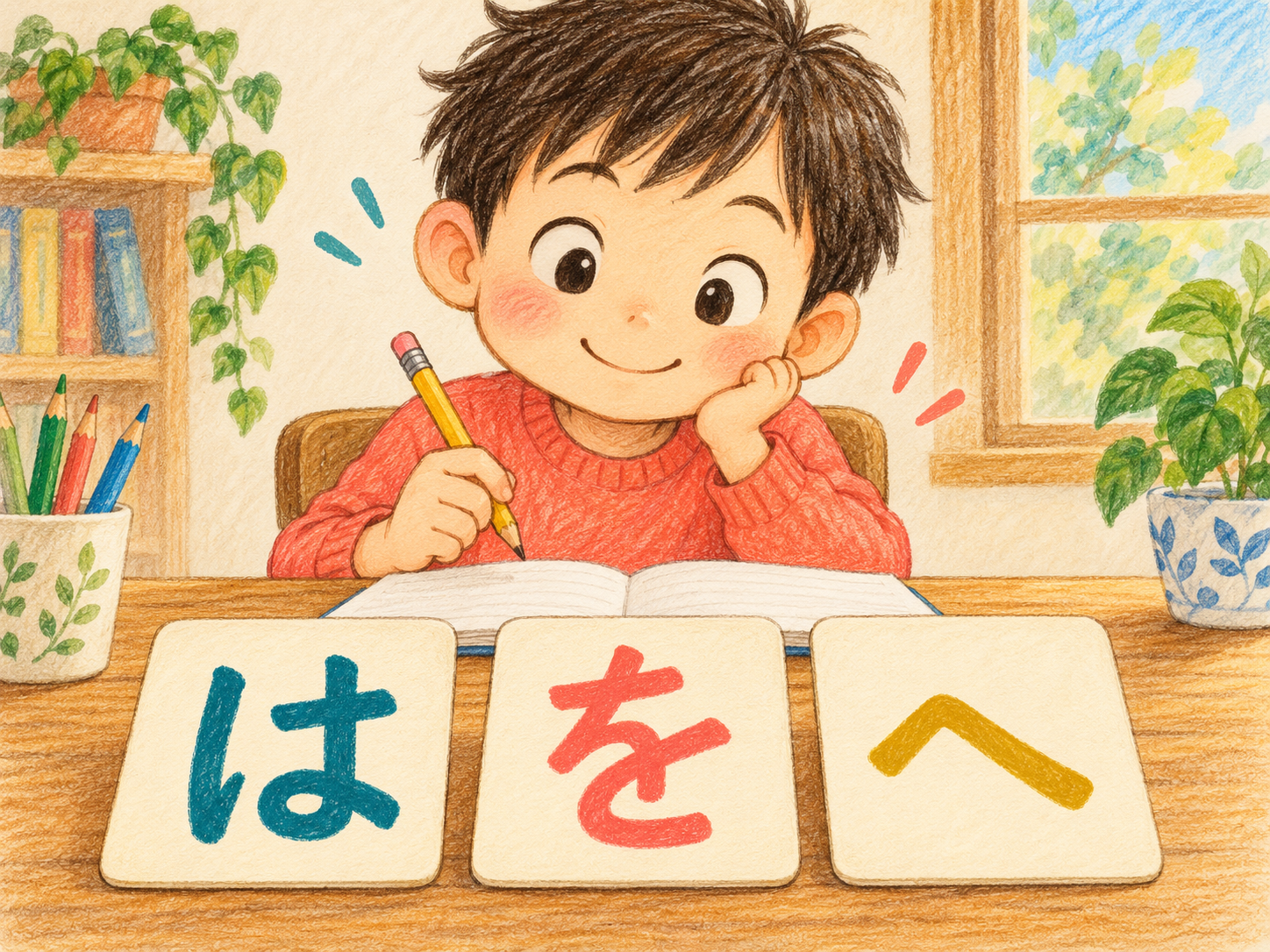 Hiragana spelling
 Choose in a sentenceCheck は・を・へ in contextExplore the activities +
 Choose a spellingNotice long-vowel spellingsExplore the activities +
2 activities or resources to compare.
If it sounds like wa, do you write わ?
In ぼくは, the particle は is pronounced wa. Choosing a character by its sound differs from choosing the spelling that belongs in a sentence. The Japanese examples remain part of the learning content.